

What should you expect from a residential property sales agent beyond finding a buyer? The agent should take responsibility for agreed parts of the sale from start to finish, while keeping you informed about what they are handling and which decisions remain yours.
Selling a home involves connected tasks: marketing, viewings, offers and the steps between an agreed sale and completion. It can be difficult to follow if communication is inconsistent or you are unsure who is handling a particular question. A clear, personal service helps you see what has happened and what needs to happen next.
This article explains what to expect at each stage, from valuation and property marketing to buyer negotiation and sales progression. It also covers how local knowledge can inform pricing and marketing without promising a particular result. At FSG Estate Agent, Fran works directly with clients throughout the sale, drawing on local knowledge of Twickenham, Richmond and Chiswick. A complimentary, no-obligation valuation is a useful starting point, with no commitment to sell.
Key Takeaways
- A residential property sales agent coordinates key parts of your sale, while you remain involved in decisions such as which offer to accept.
- Valuation, marketing, viewings, negotiation and sales progression connect from launch through to completion.
- Local insight in Twickenham, Richmond or Chiswick can inform pricing discussions and how your property is presented to buyers.
- Assess whether communication is clear, you know who to contact and agreed actions are followed through.
- Fran provides direct, personal support at FSG Estate Agent throughout the sale process.
What does a residential property sales agent do for a seller?
When you’re selling, the useful question isn’t just what an agent is called. It’s what support you’ll receive, who will keep things moving and which decisions stay in your hands.
A residential property sales agent represents you in the sale of your home. They advise on positioning and marketing, present the property to prospective buyers, handle enquiries and offers, and coordinate progress once a sale is agreed. Their role is to give you informed support at each stage, not to take decision-making away from you. For a general overview of the profession, see Estate agent.
In practical terms, an agent can help you consider an appropriate asking price, prepare buyer-facing marketing and describe your home clearly. They can arrange viewings, gather feedback and talk through the terms of offers. Once you decide how to respond, the agent can communicate your decision and help coordinate next steps towards completion.
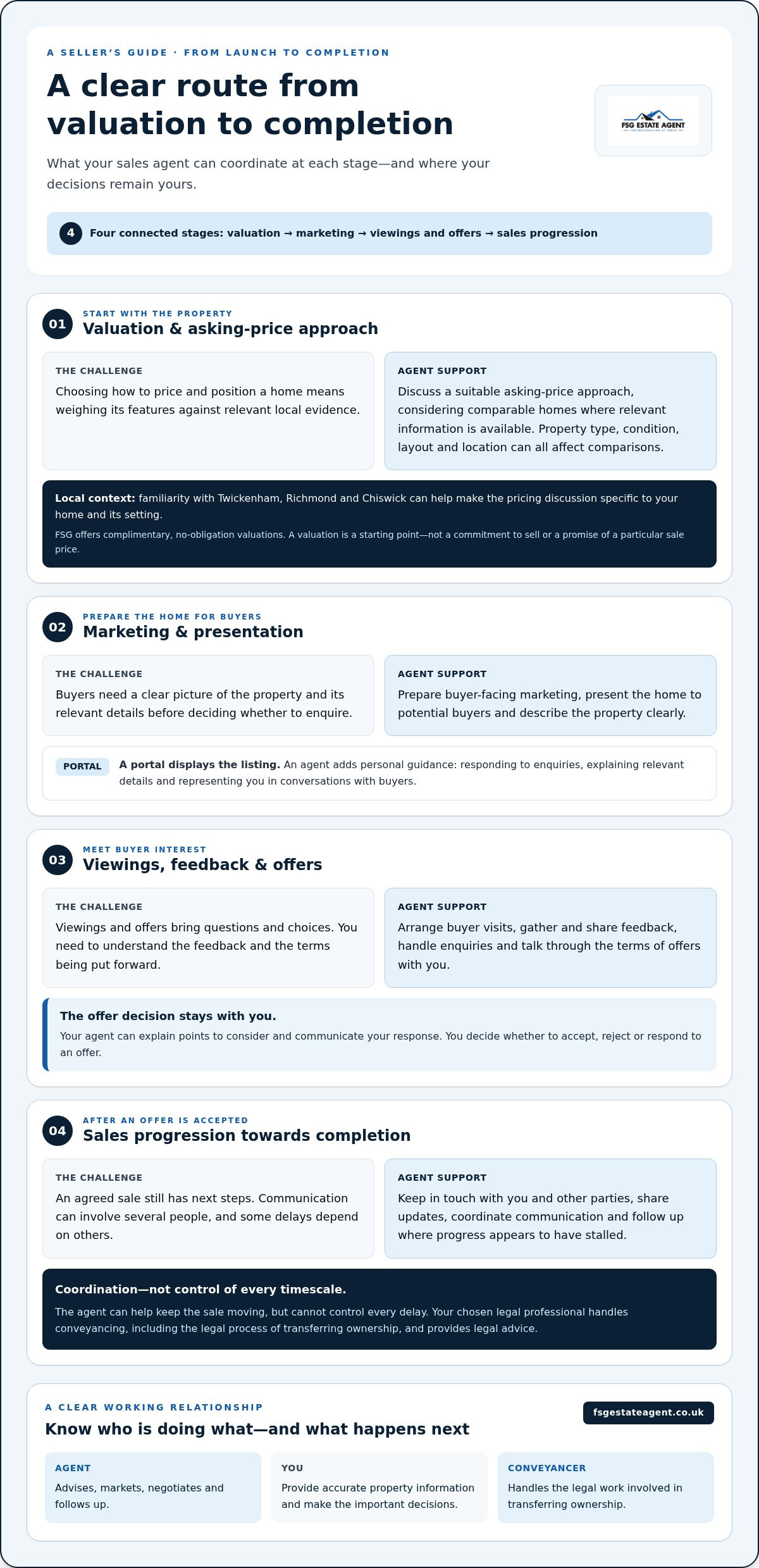
Each role has limits. The agent provides market advice and sales representation. You decide whether an offer works for you and make the important decisions. Your conveyancer, a qualified legal professional, handles the legal work involved in transferring ownership. Knowing who is responsible for each part helps you direct questions to the right person as the sale progresses.
How is a sales agent different from a property portal?
A property portal displays listings so buyers can browse homes. It gives your property an online shop window, but it doesn’t provide personal guidance or represent you in conversations with buyers. An agent can respond to enquiries, explain relevant details, arrange viewings and discuss feedback with you. They can also help you weigh up offers. The portal showcases the listing; the agent supports the conversations around it.
What does the seller remain responsible for?
You remain in control of the important choices. You decide whether to accept, reject or respond to an offer, and agree key arrangements connected with the sale. Your agent can explain points to consider, but the decision is yours.
You’ll also need to provide accurate information about the property and respond to reasonable requests as the sale moves forward. Your legal professional handles conveyancing, including the legal process of transferring ownership. The agent can help coordinate communication, but doesn’t replace your conveyancer or provide legal advice.
A clear working relationship has responsibilities on both sides. Your agent advises, markets, negotiates and follows up. You provide information and make the decisions. Agreeing on those roles from the outset makes it easier to understand what support you can expect at each step.
From valuation to completion: how a local sales agent supports your sale
A sale is easier to follow when you know what happens next. A local agent can guide you through a practical sequence: discuss value and asking-price strategy, prepare the property for marketing, bring it to buyers’ attention, arrange viewings, present offers and coordinate progress after you accept an offer.
At each step, clear communication matters. You should know what feedback came from viewings, what an offer involves and whether anything needs your attention. A residential property sales agent can help keep those conversations connected, while explaining what they can influence and what depends on others in the transaction. For a broader outline of the duties of real estate brokers and sales agents, the US Bureau of Labor Statistics describes work involved in representing buyers and sellers.
- Valuation: discuss the property and a suitable asking-price approach.
- Marketing: present the home to potential buyers through professional marketing.
- Viewings and offers: arrange buyer visits, share feedback and talk through offers with you.
- Progression: coordinate communication and next steps once an offer is accepted.
Starting with a local property valuation
A valuation gives you a basis for considering how to price your home and position it for sale. It should take account of the property’s features and relevant local evidence, such as comparable homes where suitable information is available. When considering comparisons, differences in property type, condition, layout and location can all matter. In Twickenham, Richmond and Chiswick, local familiarity can help make the discussion specific to your home and its setting. FSG offers complimentary, no-obligation valuations. It’s a useful place to start, not a commitment to sell or a promise of a particular sale price.
Keeping an agreed sale moving
Accepting an offer is an important step, but there are still things to do before completion. Sales progression is the coordination of the people, information and next steps that help an agreed sale move towards completion. The agent can keep in touch with you and other parties, share updates and follow up where progress appears to have stalled. Some delays depend on buyers, legal professionals or other parties, so an agent can coordinate communication but cannot control every timescale. Your chosen legal professional remains responsible for conveyancing and legal advice.
Fran works directly with clients through the sale process, providing a clear point of contact from valuation onwards. FSG Estate Agent offers a complimentary property valuation with no obligation to sell.
What should a residential property sales agent provide in Twickenham, Richmond or Chiswick?
A useful local service combines knowledge of the area with clear, personal support. You should be able to discuss how your property is positioned, understand the reasoning behind its marketing and know who is responsible for keeping you updated. The practical difference is having a clear basis for decisions throughout the sale, rather than a promise of a particular result.
Twickenham, Richmond and Chiswick include varied homes and settings. Local familiarity can help put your property’s features into context rather than treating every home as interchangeable. The buyer priorities relevant to one property may not apply to another. A flat, a family house and a home with distinctive outdoor space may each call for a different discussion about presentation and likely audiences. These are examples, not claims about current local demand.
| What to look for | Personal local service | Less direct experience |
|---|---|---|
| Communication | Clear updates and a known contact for questions. | You may need to establish who is handling each query. |
| Local context | Pricing and presentation discussed in relation to your home and its setting. | Advice may feel more general if it lacks property-specific context. |
| Continuity | The person advising you can remain involved as the sale develops. | Responsibility may pass between different contacts. |
Why local context can matter to a seller
Useful local advice is specific, not sweeping. An agent can interpret relevant comparable sales alongside differences in property type, condition, layout and location, then explain how those points inform a pricing conversation. In Twickenham, Richmond or Chiswick, the right comparison depends on the home, not just its area. Use current, relevant evidence when weighing up pricing advice, rather than relying on a broad claim about a neighbourhood.
Local context can also inform how a home is presented to potential buyers. An agent can help identify which features to highlight in the marketing and discuss how the description might speak to likely buyer interests, without assuming every buyer is looking for the same thing.
Why direct communication makes a difference
When a question comes up, you should know who is handling it and what happens next. Direct contact can make it easier to understand viewing feedback, consider an offer or agree a response without repeating the background to someone new. It supports clearer decisions, but cannot guarantee an offer or determine the final outcome.
At FSG Estate Agent, Fran works directly with clients throughout the sale. You have a consistent person to speak with about your property and its progress. That keeps advice and updates connected to the home you are selling, while you remain in control of decisions.
How to judge whether an agent is giving your sale proper attention
Assess an agent’s attention by looking beyond how often they get in touch. You need to understand the advice, know who is responsible for your sale and see that agreed next steps are followed through. A thoughtful service makes those things clear without promising an outcome no agent can control.
Regular, clear communication helps you understand what has happened, what needs your attention and what is expected to happen next.
Signs that communication is clear and accountable
Look for plain explanations, not vague assurances. You should be able to follow the reasoning behind valuation advice, marketing choices and buyer feedback. If an offer comes in, the agent should explain its terms clearly so you can decide how to respond.
- Clarity: You understand the advice and the reasoning behind it.
- Continuity: You know who to contact with questions as the sale progresses.
- Follow-through: The agent tells you what action is being taken and keeps you informed about the result.
- Useful updates: You hear about viewings, buyer responses and issues that may affect the next steps.
- Honest boundaries: The agent explains what they can coordinate and what depends on you or other parties.
More messages don’t automatically mean better service. What matters is that updates are relevant and arrive in time for you to make informed decisions. A residential property sales agent can organise communication, but buyers, conveyancers and other parties also shape how a transaction progresses.
A practical overview before choosing representation
Consider the service relationship as well as the initial valuation. Is the advice understandable? Do you know who will handle your sale? Has the agent explained how updates and follow-up will work? These questions help you assess the support on offer without relying on promises about price or timing.
Before deciding, note down the points that matter most to you, such as how your home will be marketed, who will share viewing feedback and how you will hear about offers. Clear answers make it easier to understand what the working relationship will look like.
At FSG Estate Agent, Fran works directly with clients throughout the sale, providing a consistent point of contact. A complimentary, no-obligation valuation is a straightforward way to discuss your property and possible next steps.
A personal residential property sales service in South West London
An agent’s service brings together informed advice, professional marketing, buyer conversations and coordination, while keeping you involved in decisions. FSG Estate Agent provides a personal service for sellers in Twickenham, Richmond and Chiswick.
Fran works directly with clients from the valuation through the sale process. You have a clear point of contact who understands the property and can explain what is happening, what needs your attention and what comes next. That personal relationship is central to the service, not a promise of a particular price, buyer or timescale.
What working directly with Fran means
Direct involvement helps keep advice and updates connected. You can discuss how the property is presented, hear buyer feedback and talk through offers with the person working with you. Fran provides professional property marketing, buyer negotiation and proactive sales progression through to completion. You remain in control of decisions while Fran supports the sale and helps coordinate its progress.
A consistent contact can also make responsibilities easier to follow. You know who is guiding the marketing and discussing offers, and who to speak with about next steps. As the sale develops, clear communication helps you understand what has been done and what may need to happen next. Progress still depends on the people involved in the transaction, but you should not be left guessing about the agent’s role.
For sellers, this can make the service more straightforward: one person stays close to the details, explains the choices and follows up on the work involved. You can ask questions without having to repeat the background to a new contact. If a matter involves legal advice or conveyancing, that remains with your chosen legal professional; the agent’s role is to support and progress the sale.
A straightforward first step for local sellers
If you’re considering a move, you don’t need to have every detail decided before starting a conversation. A valuation gives you a considered view of your property and a chance to discuss how it might be presented to buyers. It can help you explore your options without committing to put your home on the market.
FSG offers complimentary, no-obligation property valuations in Twickenham, Richmond and Chiswick. It’s a simple starting point, whether you’re ready to plan a sale or still weighing up what to do. You can discuss your property, the marketing approach and the support involved, then decide what feels right for you.
For a personal conversation about selling your home, arrange your complimentary, no-obligation valuation.
Take the next step at your own pace
Before deciding to sell, consider what you need from the move and what would help you feel ready: a clearer idea of your home’s position, time to plan or a better understanding of the process. A conversation with a residential property sales agent can turn those questions into practical next steps without requiring you to make every decision at once.
If you’re weighing up a sale in Twickenham, Richmond or Chiswick, start with a complimentary, no-obligation property valuation. It’s an opportunity to discuss your home and explore your options, not a commitment to put it on the market. From there, you can decide what feels right and when.
Arrange a complimentary, no-obligation property valuation to discuss your options and plan your next step with greater clarity.
Frequently Asked Questions
Do I need a residential property sales agent to sell my home?
No, you can sell privately, but you’ll take on tasks an agent could handle. These may include discussing an asking-price approach, preparing marketing, answering buyer questions, arranging viewings and negotiating offers. Consider how much time you can give to enquiries and visits, and how comfortable you feel discussing offers. An agent can also help coordinate progress after an offer is accepted, but your conveyancer remains responsible for the legal work.
Is a property valuation the same as an asking price?
No. A valuation is an informed estimate based on relevant evidence and the property’s features. The asking price is the figure used in the marketing, set as part of your selling strategy. For example, you might discuss how the asking price should reflect the home’s condition and comparable properties, rather than treating a valuation as a guaranteed offer. FSG provides complimentary, no-obligation valuations to help you consider your options.
Can an estate agent guarantee that my house will sell?
No responsible agent can guarantee a sale, a particular price or completion by a set date. Buyer interest, negotiations and other parts of the transaction affect what happens. You can expect an agent to give considered advice, market the property and keep you informed about interest and offers. If circumstances change, discuss the options, such as reviewing the marketing strategy or considering a buyer’s revised offer.
What happens if a buyer pulls out after making an offer?
If a buyer withdraws before the transaction is complete, speak with your agent promptly to understand what has changed and discuss your options. Depending on your circumstances, you might continue discussions with another interested buyer or reconsider the marketing plan. Your conveyancer can explain any legal implications and handle the legal work. Sales progression can help keep communication organised, but it cannot prevent every buyer from changing their mind.
Is an estate agent responsible for conveyancing?
No. An estate agent handles the marketing and negotiation side of the sale, while a conveyancer or solicitor manages the legal transfer of ownership. Direct questions to the right person: ask your agent about viewings, buyer feedback or an offer, and your legal professional about contracts, searches or legal advice. This distinction helps you avoid relying on an agent for matters outside their role.
Do I have to accept an offer recommended by my estate agent?
No. You decide whether to accept, reject or negotiate. Your agent can explain the offer and help you consider it alongside your priorities, such as your preferred moving plans or any conditions attached to the buyer’s proposal. You can take time to weigh up the information rather than feeling obliged to say yes immediately. Once you’ve decided, your agent can communicate your response and discuss the next steps.
Is a complimentary property valuation a commitment to sell?
No. A valuation is a chance to discuss your home’s potential market value and consider a possible selling strategy. FSG’s valuation is complimentary and carries no obligation to appoint the agency or put your property on the market. Use the discussion to consider practical questions, such as whether your plans are settled and what information you need before deciding. The choice to sell remains yours.


